A prospect sounds interested. They explain what they need, ask about pricing, and agree that your solution could help. You finish the call expecting the conversation to move forward.
Then a busy afternoon turns into three days. Your next message says, “Just checking in.” By the time you reconnect, the prospect needs a reminder of what you discussed.
A clear sales call follow up process gives every promising conversation somewhere to go. It helps your team capture context, agree on timing, and make the next interaction useful.
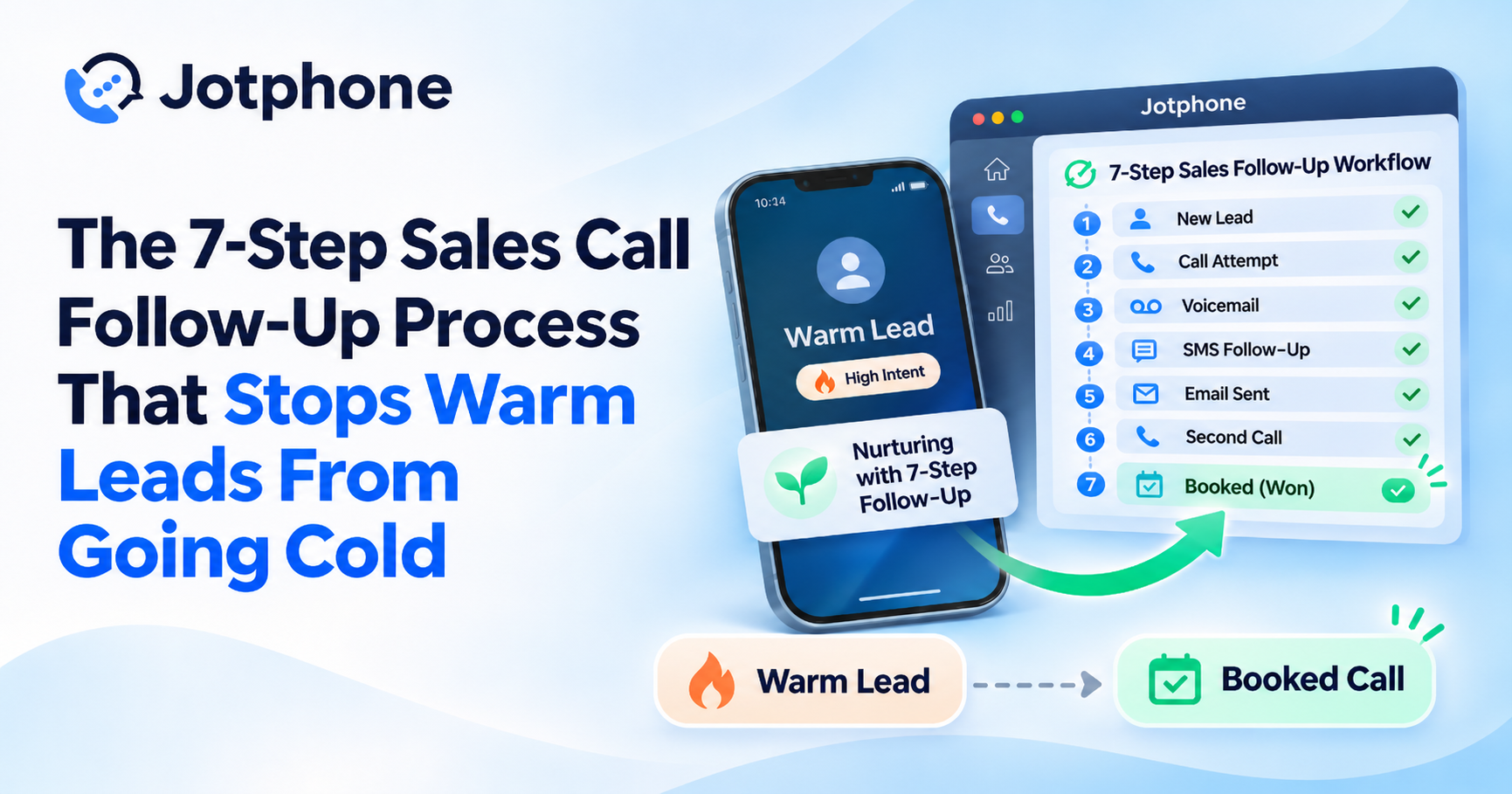
Here are seven steps to build that consistency into your daily sales workflow.
1. End the First Call With an Agreed Next Step
Follow-up starts before you hang up.
“Let’s stay in touch” leaves both sides guessing. Instead, agree on what happens next, who is responsible, and when it should happen.
For example:
“I’ll send the pricing comparison today. Would Thursday at 11 a.m. work for a quick call after you’ve reviewed it?”
Before closing, confirm:
-
The action: What will you send, demonstrate, or clarify?
-
The owner: Who needs to do something next?
-
The timing: When should the conversation continue?
-
The channel: Does the prospect prefer a call, email, or text?
If they need approval from a colleague, ask what that person needs to evaluate. Your follow-up can then help them prepare for that conversation.
The goal is a small, relevant commitment that both sides understand.
2. Capture the Details While the Conversation Is Fresh
“Interested, call next week” is a difficult note to act on. It says little about why the prospect was interested or what the next call should accomplish.
Record enough detail for you or a teammate to continue naturally:
|
Detail to capture |
Example |
|---|---|
|
Main challenge |
Customer callbacks are being missed during busy periods |
|
Desired outcome |
Give the team a clearer way to manage follow-ups |
|
Buying context |
Comparing options before next month’s team expansion |
|
Open question |
Needs to understand calling and messaging costs |
|
Commitment |
Send pricing today; call Thursday at 11 a.m. |
|
Contact preference |
Calls preferred; permission given for appointment texts |
Save these details in your CRM or shared lead record, alongside the assigned owner and next action.
JotPhone’s contact management and organized call history can support the communication side of this workflow. Keep qualification details and follow-up commitments in your team’s lead management system so the full context remains available.
A useful test: could another representative take over without asking the prospect to repeat the first conversation?
3. Prioritize Warm Leads by Intent and Readiness
Some prospects need a proposal today. Others are researching a purchase they may make in six months. They should not receive identical follow-up.
Build a sales follow up workflow around the signals from the conversation:
|
Priority |
Signals from the prospect |
Follow-up approach |
|---|---|---|
|
Ready to act |
Requests a proposal, discusses implementation, or confirms a deadline |
Deliver what was promised and protect the agreed callback time |
|
Actively evaluating |
Compares providers, asks detailed questions, or involves colleagues |
Address the specific question holding up the next step |
|
Interested for later |
Describes a relevant need but gives a future buying window |
Agree on a suitable date to reconnect |
|
No current fit |
Identifies a mismatch or declines further contact |
Record the outcome and respect their preference |
Ask direct questions rather than guessing from enthusiasm:
“When would you ideally want this in place?”
“What would you need to confirm before deciding?”
Your lead follow up system should make priority, ownership, and the next action visible. Assign one accountable owner to prevent duplicate outreach from different representatives.
4. Set Follow-Up Timing Around the Conversation
The best starting point for timing is what the prospect agreed to.
If you promised information today, send it today. If they asked for a week to review it, give them that time. A generic sequence should never override a clear request.
When no date was agreed, use a flexible starting schedule:
|
Timing |
Purpose |
Suggested action |
|---|---|---|
|
Same business day |
Confirm understanding and fulfill promises |
Send a concise recap and any requested information |
|
Two to three business days later |
Resolve a specific unanswered question |
Call or send a relevant message through the preferred channel |
|
Five to seven business days later |
Offer a useful reason to reconnect |
Share a tailored example or ask about the decision timeline |
|
After a short unanswered sequence |
Clarify whether to continue |
Ask whether to reconnect later or pause outreach |
This is an example to adapt, not a universal schedule. Consider urgency, buying cycle, local working hours, and the prospect’s preferences.
If they reply, change the plan. If they decline or ask you to stop, end the sequence.
A strong sales follow up strategy responds to the conversation as it develops.
5. Give Calls and SMS Different Jobs
Use calls when the discussion needs explanation: an objection, a pricing question, or a decision involving several people.
Use texts for brief coordination where the prospect has agreed to receive them. SMS follow up for sales works best when the message has one clear purpose.
For example, after an unanswered scheduled call:
“Hi Priya, it’s Alex from [Company]. I tried calling for our pricing review. Would you like to reschedule for tomorrow?”
For a meeting reminder:
“Hi Priya, Alex from [Company] here. Are we still on for our 11 a.m. call tomorrow?”
Identify yourself and make the question easy to answer. Use SMS only where you have the appropriate permission, and honor requests to stop.
JotPhone brings outbound calling, a connected dialer, contacts, and SMS into one workspace. These capabilities can help representatives move between calls and messages while keeping communication organized.
Avoid following an unanswered call with several messages across different channels on the same day. Each contact should have a reason that makes sense to the prospect.
6. Personalize Each Message Around One Useful Next Action
Personalization means remembering what matters to the buyer.
A good follow up after sales call should answer three questions:
-
What did we discuss?
-
Why is this message relevant now?
-
What is the next useful action?
Use the prospect’s stated challenge and the commitment you made. Keep each message focused.
Example: Recap After the First Call
Subject: Next steps for your team’s customer callbacks
Hi Priya,
You mentioned that callbacks become difficult to manage when several team members handle customer enquiries.
As promised, I’ve attached the pricing comparison for your five-person team. On Thursday, we can review the option that best fits your calling and messaging needs.
Does 11 a.m. still work?
Alex
Example: Follow-Up After Sending Information
Hi Priya,
You wanted to understand how the cost would change as your team grows. I’ve added a five-user and ten-user comparison to the proposal.
Would a ten-minute call on Tuesday help you review the difference?
Alex
Example: Pause After No Response
Hi Priya,
When we spoke, you were comparing options ahead of your team expansion. Is that still planned for next month, or would a later conversation be more useful?
I’m happy to pause follow-ups if your priorities have changed.
Alex
Each example connects to the earlier conversation and asks for one manageable response.
For outbound sales follow up, this continuity matters more than finding a new way to say “checking in.”
7. Record Outcomes and Review What Moves Leads Forward
Every attempt should leave a clear outcome: connected, unanswered, rescheduled, information requested, paused, or closed.
Then record the next action and owner. “Called prospect” documents activity. “Prospect requested revised pricing; Alex to send it by Wednesday” makes the next step actionable.
Managers should review both consistency and progress:
|
Metric |
What it helps managers assess |
|---|---|
|
On-time follow-up rate |
Whether actions due during the period were completed by their deadlines |
|
Leads without a next action |
Where interested prospects may be left waiting |
|
Follow-up response rate |
How many contacted leads responded within a defined period |
|
Meetings booked and held |
Whether outreach produces conversations that actually happen |
|
Opportunity progression |
Whether followed-up leads move to the next agreed sales stage |
|
Won, lost, and paused outcomes |
Where opportunities progress, stall, or end, and why |
For response rates, count unique leads rather than treating every message as a separate opportunity. Use the same reporting window when comparing results.
JotPhone’s activity dashboard and call history provide visibility into communication activity. Review these alongside your CRM’s opportunity stages and outcomes to connect sales call tracking with business results.
A high call count alone does not explain whether the team is moving the right conversations forward.
Common Follow-Up Mistakes to Avoid
Even a documented lead management process can break down during a busy week. Watch for these habits:
-
Sending vague reminders: Replace “Any updates?” with a specific question or useful information.
-
Missing your own commitments: Deliver the promised proposal before asking the prospect to make a decision.
-
Giving every lead the same sequence: Adjust timing to intent, readiness, and agreed preferences.
-
Losing context during handoffs: Share the challenge, commitments, open questions, and next action.
-
Continuing after a clear refusal: Record the preference and stop the outreach.
-
Rewarding volume alone: Review replies, completed meetings, and progression alongside activity.
These sales follow up best practices work when they become daily habits rather than occasional reminders.
Keep the Next Conversation Easy to Continue
A dependable sales call follow up process gives each warm lead a clear owner, a useful next step, and communication that builds on what they have already told you.
JotPhone’s business phone system supports that work with outbound calling, a connected dialer, contact management, SMS, call history, and visibility into team activity. Pair those tools with clear ownership and consistent recordkeeping to help your team stay prepared for the next conversation.
Explore JotPhone’s plans to compare options for your team, or book a demo to see how its calling, messaging, and contact tools can support your sales follow-ups.