Business communication has become more important than ever, and many companies are looking for cost-effective ways to stay connected. This is why businesses are increasingly choosing a cloud phone system over traditional communication methods. A cloud phone system helps organizations improve communication while keeping costs under control and ensuring secure connectivity.
Many business owners assume that implementing a cloud phone system is expensive. However, that is a common misconception. In reality, it can reduce communication costs while offering advanced features that are not available with traditional phone systems. In this blog, we will compare traditional landline phones with modern cloud-based communication to help you understand which option delivers better value.
What is a cloud phone?
A cloud phone allows businesses to make calls, send messages, share emails, and exchange files using cloud technology. While it performs the basic functions of a traditional phone, it also includes advanced communication features that improve productivity and collaboration.
All communication is handled through an internet connection. To use a cloud phone system, you only need a stable internet connection, a cloud phone application, a smartphone or desktop, and a headset if required. Whether you run a startup, a small or medium-sized business, or a large enterprise, this solution helps create professional and organized business communication.
What Is a Traditional Landline Phone System?
A landline phone system is designed primarily for making and receiving phone calls. It also allows users to view call history, but it lacks many of the advanced features available in modern communication platforms.
Traditional landlines often experience network issues and lower voice quality compared to internet-based systems. If the telephone cable is damaged, communication is interrupted until repairs are completed. Installation usually requires additional wiring and technician support, making both setup and maintenance more expensive. Although some businesses still rely on landlines, they offer limited functionality when compared to a cloud phone system.
Initial Setup Cost: Cloud vs. Landline
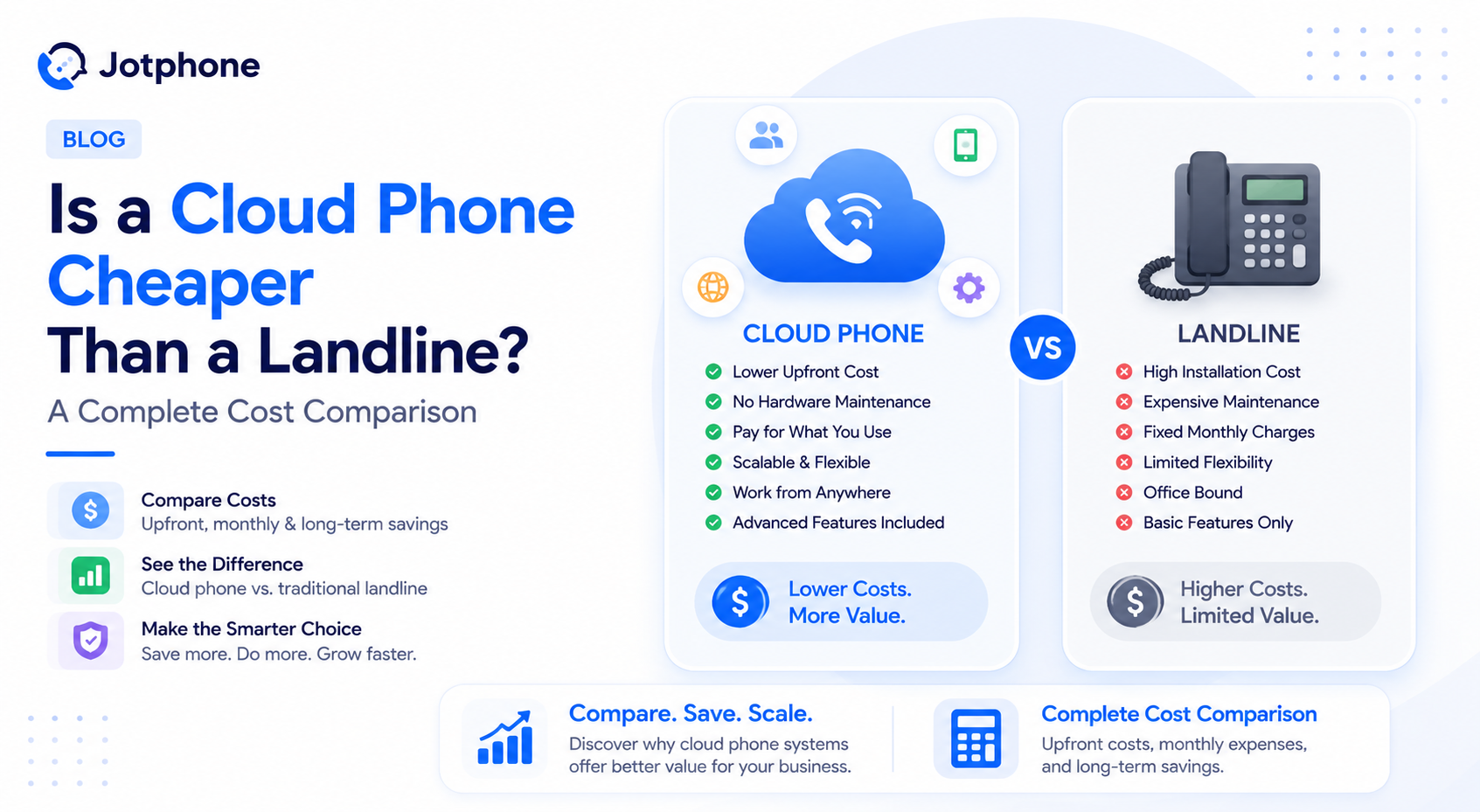
The initial installation cost of a landline phone system is generally higher because service providers must install physical wiring and supporting infrastructure. In contrast, setting up a cloud phone system is simple and usually involves installing software or an application on your preferred device.
A landline requires dedicated hardware and physical telephone connections, while a cloud solution only requires a smartphone, desktop, or compatible device with internet access. Businesses using landlines may also have to pay activation charges and ongoing service fees. With a cloud solution, you simply choose a subscription plan that fits your business requirements. Overall, the setup cost is significantly lower than a traditional landline system.
Monthly Operating Cost
The monthly subscription for a cloud phone system depends on the selected plan and is generally affordable for businesses of all sizes. On the other hand, monthly rental charges for a landline phone system are usually higher.
Traditional landlines also include separate call charges, with international calls costing considerably more than local calls. Since cloud communication operates over the internet, businesses can reduce or eliminate many of these additional expenses. Maintenance costs are another advantage, as cloud services typically require minimal ongoing maintenance compared to traditional landlines.
Maintenance and Upgrade Expense
A landline phone system requires regular hardware maintenance to ensure reliable performance. Repairs, equipment servicing, and replacements can increase long-term expenses.
A cloud phone system requires very little hardware maintenance because the service is software-based. Software updates are managed by the provider and help improve security and performance. If technical issues occur, IT support is generally available to resolve them quickly without replacing physical equipment.
What Features Do You Get From The Cloud Phone System?
A cloud based phone system offers multiple pricing plans, allowing businesses to choose the features that best match their needs. It includes advanced communication capabilities such as call recording, call backup, authorized access, call duration tracking, and communication history.
The system can be accessed from smartphones and desktops, allowing employees to work from any location. Businesses can also automate call handling, manage incoming calls efficiently, and improve communication across departments. These features help increase productivity while maintaining professional business communication.
Scalability and Business Growth
One of the biggest advantages of a cloud phone system is its ability to grow with your business. New users can be added easily by creating individual login credentials.
The system supports businesses operating across multiple locations and enables both domestic and international communication. It also works well for remote employees by helping businesses monitor work hours and manage workforce communication efficiently. As organizations expand, the system scales without requiring major infrastructure changes.
Hidden Costs Businesses Often Overlook
A cloud phone system has very few hidden costs because it is software-based. Businesses may only pay additional charges if they require premium features or customizations.
A landline phone system, however, often involves hidden expenses such as hardware repairs, equipment replacement, technician visits, and office relocation costs. Moving to a new office may require reinstalling telephone lines and infrastructure, which increases overall expenses. Additional energy and infrastructure costs also make traditional landlines more expensive over time.
When Is a Landline Still the Better Choice?
A landline phone system may still be a suitable option in locations where internet connectivity is unreliable. It can also serve as a dependable backup communication method during emergencies.
Small businesses with very limited communication needs may continue using landlines if advanced features are not required. However, businesses planning for future growth should consider modern communication solutions that offer greater flexibility and scalability.
Is a Cloud Phone Worth to Invest?
Yes, investing in a cloud phone system is worthwhile for businesses that want to improve communication while reducing operational costs. It provides advanced features that enhance collaboration, simplify communication management, and improve overall efficiency.
Managers can monitor communication activities through a centralized dashboard, while employees benefit from flexible access and improved productivity. Better communication also leads to improved customer service and supports long-term business growth, making it a valuable investment.
Conclusion
By now, you should have a clear answer to the question, “Is a cloud phone cheaper than a landline?” The right communication solution depends on your business needs, budget, and future growth plans.
For most businesses, a cloud phone system offers lower costs, advanced features, better flexibility, and easier management than traditional landlines. If you are looking for a reliable business communication solution, JotPhone can help you modernize your communication system with affordable plans and powerful features. Contact our team today to learn more and request a quote.
FAQ
Is a cloud phone cheaper than a traditional landline phone system?
What equipment is required to use a cloud phone system?
Can VoIP phone systems work with existing business phone numbers?
Is a cloud based phone system suitable for small businesses?
What factors should business compare before switching from a landline phone to a business phone system?