Have you noticed that many successful businesses use their own business phone system? It helps them communicate more efficiently with customers, employees, and partners. Traditional phone systems are mainly designed for making voice calls, while modern business phone solutions offer many advanced features that improve communication and productivity.
Some businesses assume that investing in a business phone system is an unnecessary expense. However, the right solution not only improves communication but also keeps business conversations secure and stores important communication records for future reference.
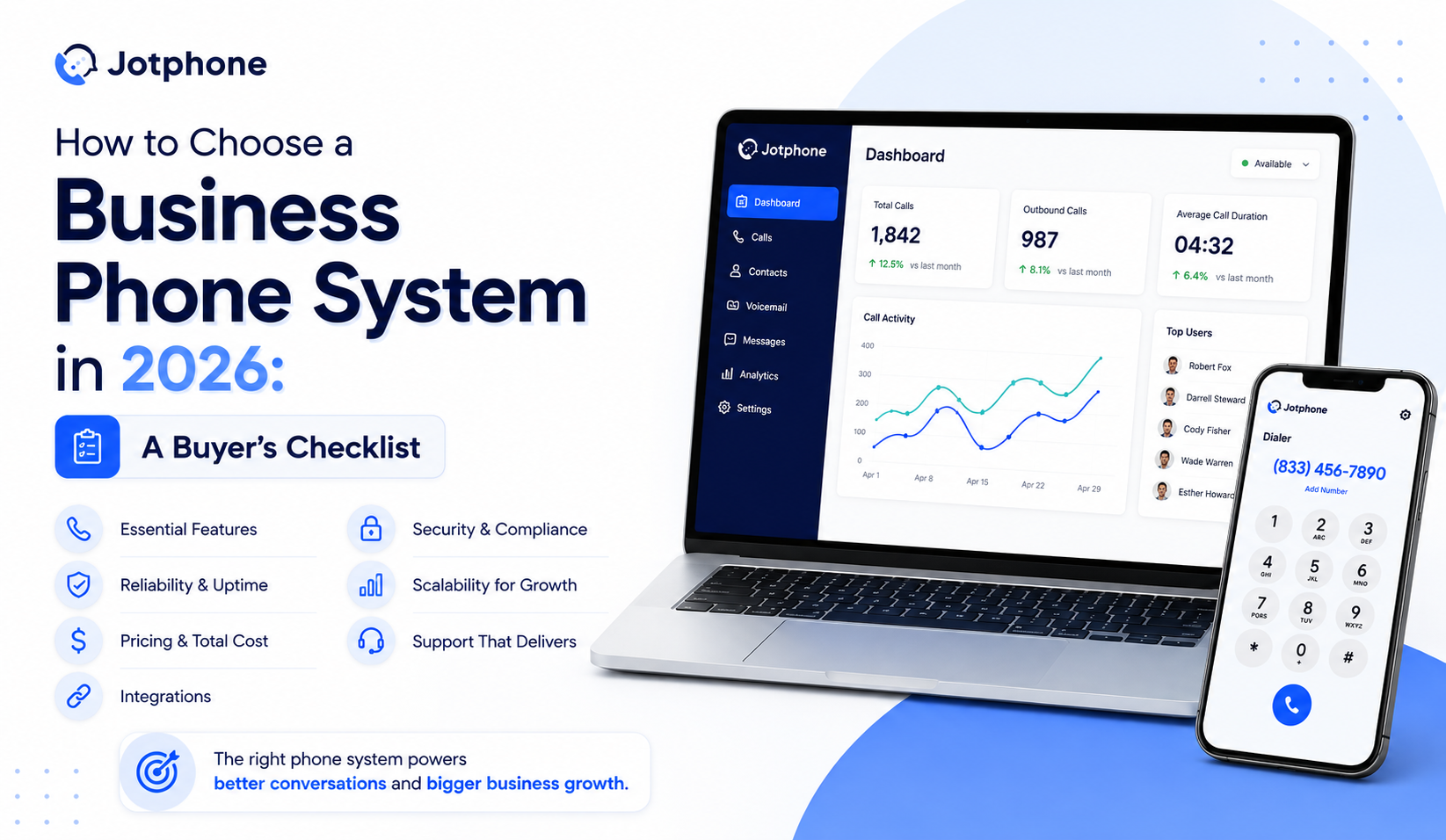
In this blog, we’ll explain How to Choose a Business Phone System in 2026 and the key factors you should consider before making a decision.
Understand Your Business Communication Needs
Before choosing a business phone system, identify your current communication challenges. Determine how many employees and departments will use the system. Consider whether your workforce includes remote, hybrid, or office-based employees.
Next, evaluate the communication needs of your sales and customer support teams. Think about your future business growth and whether your communication system can support expansion. Understanding these requirements will help you choose a solution that matches your business needs.
Choose Between Traditional and Cloud-Based Phone System
A traditional phone system allows you to make voice calls and conference calls using physical telephone lines. While it works for basic communication, it often requires expensive hardware and ongoing maintenance.
A cloud business phone system offers greater flexibility and lower operating costs. Since it is software-based, it can be accessed from desktops, laptops, and smartphones without complex installation. It also allows you to record calls, securely store communication data in the cloud, and easily scale as your business grows.
Compared to traditional systems, cloud solutions provide better flexibility, easier management, and more secure business communication.
Look for Essential Calling Features
A modern business phone system should include features that improve daily communication.
Call forwarding ensures customers can reach the right person even when employees are away from the office. Voicemail allows customers and team members to leave important messages. An auto attendant answers calls automatically and directs callers to the appropriate department without delays.
Conference calling makes team discussions and decision-making more efficient. Mobile accessibility allows employees to stay connected from anywhere, while video calling supports face-to-face meetings whenever needed.
Prioritize Reliability and Call Quality
Reliable communication is essential for every business. Choose a solution that offers high uptime and consistent performance.
HD voice quality provides clear conversations without interruptions. The application should perform smoothly on 4G, 5G, and Wi-Fi networks to ensure reliable communication in different environments.
Cloud backup options are also valuable because they securely store call records, making it easy to retrieve previous conversations whenever required.
Evaluate Integration Capabilities
Integration plays an important role in improving business efficiency.
CRM integration helps businesses manage customer interactions more effectively. Helpdesk software simplifies customer support, while productivity tracking tools provide valuable insights into employee performance.
Email platform integration allows teams to manage calls and emails from a single dashboard. Calendar integration helps schedule meetings and reminders, while API integration allows businesses to extend software functionality by connecting with additional applications.
Consider Security and Compliance
Business communication should always be secure. Choose a system that offers end-to-end encryption to protect sensitive information.
Only authorized users should have access to business data. Secure voice communication helps prevent unauthorized access, while user authentication provides unique login credentials for every employee.
Calls related to customer complaints or compliance should be routed to the appropriate department for faster resolution. Regular software updates also improve security and help protect your communication system from emerging threats.
Compare Pricing Beyond Monthly Costs
When comparing solutions, don’t focus only on monthly subscription fees.
Traditional phone systems usually require expensive hardware, installation, and maintenance. Software-based communication platforms eliminate much of these costs because they can be installed on existing computers and smartphones.
International calling costs should also be considered, as cloud-based solutions often provide more affordable calling rates. Most providers offer transparent pricing, allowing businesses to pay only for the features they need.
Check Scalability for Future Growth
As your business grows, your communication system should grow with it.
The software should allow authorized administrators to add new users easily. A virtual phone system also makes it simple to support multiple office locations using a single communication platform.
It should efficiently support international teams while providing regular software updates without disrupting daily operations. Long-term flexibility ensures your communication system continues to meet changing business requirements.
Evaluate Customer Support and Onboarding
Reliable customer support is essential when selecting a communication platform.
The provider should offer responsive customer service whenever assistance is needed. Training resources help employees learn the system quickly, while a comprehensive knowledge base allows users to solve common issues independently.
Setup assistance, including AI-powered responses and installation guidance, helps businesses complete implementation smoothly. Fast response times also improve customer satisfaction by minimizing delays during support requests.
Use This Buyer’s Checklist Before Making a Decision
Before making your final decision, compare different business communication solutions to determine which one best meets your requirements.
Request a product demonstration to understand its features and usability. Read customer reviews and ratings to learn about real user experiences. Test call quality, connection stability, and overall performance before purchasing.
Review contract terms carefully to understand pricing and service conditions. Evaluate the available security features and calculate the total cost of ownership, including subscriptions, integrations, and future expansion.
Conclusion
Choosing the right business phone system in 2026 can significantly improve communication, increase productivity, and support business growth. By evaluating your communication needs, required features, security, scalability, and overall costs, you can confidently select the best solution for your organization.
If you’re looking for a reliable and affordable business phone system, Jot Phone offers a solution designed to meet your business requirements. We build customized business communication software that can be tailored to your specific needs. Upgrade your communication system today and experience a smarter, more efficient way to connect with your customers and team.