Phone calls remain an important communication channel for sales and customer service teams. However, simply making and receiving calls does not tell businesses whether their communication process is working effectively.
This is where call analytics for business can provide valuable insights. By analyzing call volume, missed calls, response times, call duration, and other performance data, businesses can identify opportunities, improve employee performance, and make better decisions.
Instead of relying on assumptions, managers can use actual call data to understand how teams communicate with customers and where improvements are needed.
What Is Call Analytics?
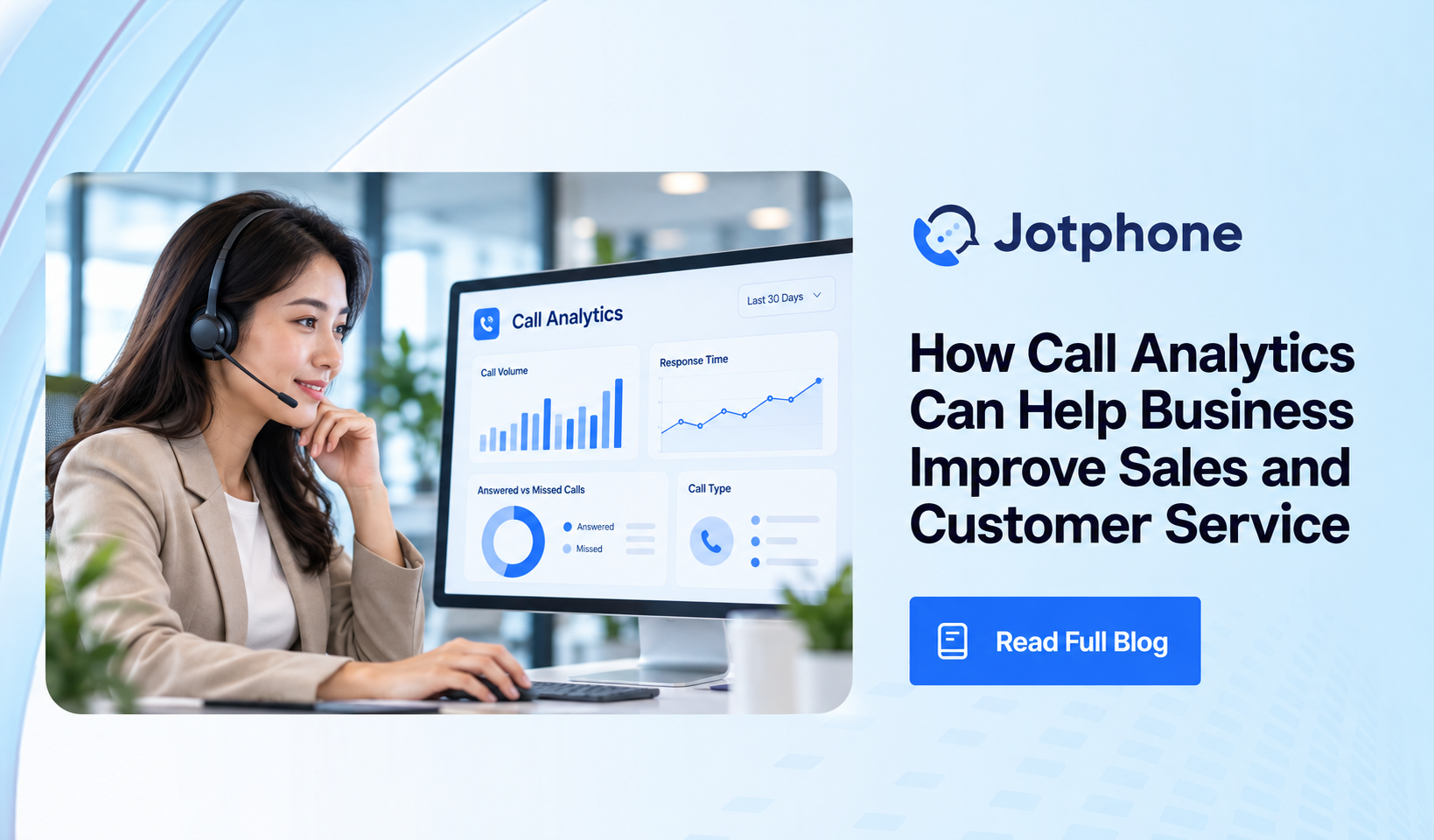
Call analytics involves collecting and analyzing information about business calls. Depending on the system, this can include answered and missed calls, call duration, response times, call outcomes, recordings, and employee activity.
Call analytics software organizes this information into dashboards and reports, making it easier for managers to identify trends and evaluate communication performance.
For example, a business may discover that a large number of calls are missed during certain hours. Managers can use this information to adjust staffing or improve call routing.
Key Call Performance Metrics to Track
Businesses can monitor several call performance metrics to understand how effectively their teams handle calls:
- Call Volume: Measures the number of inbound and outbound calls.
- Answer Rate: Shows how frequently incoming calls are answered.
- Missed Calls: Identifies calls that may represent lost opportunities.
- Call Duration: Provides insight into the length of customer conversations.
- Response Time: Measures how quickly teams respond to customer inquiries.
- First-Call Resolution: Shows how effectively customer issues are resolved during the first interaction.
- Conversion Rate: Helps sales teams connect calls with successful outcomes.
Tracking these metrics together provides a more complete picture of business communication performance.
How Call Analytics Improves Sales Performance
Sales teams need to know which activities are generating results. Sales call analytics can help managers understand call patterns, follow-up activity, and potential opportunities.
For example, businesses can identify missed calls from potential customers and determine whether follow-ups were completed. Managers can also compare sales activity to outcomes and identify communication patterns associated with successful conversations.
This information can support better sales coaching and help representatives prioritize important leads.
Reducing Missed Sales Opportunities
A missed call can mean a missed business opportunity, especially when the caller is a potential customer.
Call tracking software can help businesses identify unanswered calls and monitor response activity. Managers can use this information to determine whether calls are being handled promptly and whether additional follow-up procedures are necessary.
If missed calls increase during specific periods, businesses may need to adjust staffing, improve routing, or introduce additional communication options.
The objective is not simply to increase the number of calls answered but to ensure that valuable customer opportunities receive appropriate attention.
How Call Analytics Improves Customer Service
Customer service call analytics can reveal where customers experience delays or communication problems.
Businesses can analyze metrics such as response time, missed calls, call duration, and resolution rates to identify service gaps. Recurring customer questions or complaints can also highlight areas where processes, products, or employee training may need improvement.
For example, if customers frequently contact support about the same issue, managers can use call insights to improve documentation, employee training, or customer self-service resources.
This makes analytics useful not only for measuring employees but also for improving the overall customer experience.
Using Analytics to Improve Employee Performance
Call data can help managers understand individual and team performance. Metrics such as call volume, answer rates, response times, and outcomes can highlight both strengths and areas that require improvement.
However, analytics should be used as a coaching tool rather than simply a monitoring system. Managers can use performance trends to provide targeted training and establish realistic benchmarks.
Regular feedback based on actual communication data can help employees improve their sales and customer service skills.
Making Better Business Decisions With Call Data
Call analytics can also support broader operational decisions. If a company receives a high volume of calls during particular hours, managers can use that information when planning staffing schedules.
Similarly, consistently high missed-call rates may indicate a need for better call routing, additional employees, or automated assistance.
These insights can support decisions related to staffing, sales planning, customer support, employee training, and communication workflows.
Call Analytics vs. Basic Call Tracking
Basic call tracking may provide information such as call history, duration, and recordings. While useful, this information alone may not explain broader communication performance.
Call analytics combines multiple data points to provide a clearer view of activity, employee performance, response times, and outcomes.
For businesses managing large call volumes, this broader view can make it easier to identify trends and take action based on measurable results.
Choosing the Right Call Analytics Software
Before selecting call analytics software, businesses should evaluate whether it provides the information needed for their sales and customer service goals.
Important factors include:
- Reporting and dashboard capabilities
- Real-time or historical insights
- Call recording and history
- Performance metrics
- Integrations
- Scalability
- Security
- Ease of use
The right platform should make call information easier to understand and turn into practical business decisions.
Conclusion
Understanding how call analytics improves sales and customer service can help businesses make better use of every customer conversation. By monitoring call activity, missed opportunities, response times, employee performance, and customer interactions, companies can identify problems and improve communication workflows.
JotPhone provides business communication tools that can help organizations manage calls and access useful communication insights. Businesses can evaluate its capabilities based on their sales, customer service, reporting, and communication requirements.
FAQ
- What is call analytics for business?
Call analytics for business is the process of collecting and analyzing call data to understand call volume, performance, customer interactions, and outcomes. - How does call analytics help improve sales?
It can help sales teams identify missed opportunities, monitor follow-ups, analyze call activity, and understand patterns associated with successful customer interactions. - How can call analytics improve customer service?
It helps businesses monitor response times, missed calls, resolution rates, and customer interaction patterns, making it easier to identify service gaps. - What call performance metrics should businesses track?
Important metrics include call volume, answer rate, missed calls, response time, call duration, first-call resolution, and conversion rate. - How should businesses choose call analytics software?
Businesses should consider reporting capabilities, performance metrics, integrations, scalability, security, ease of use, and whether the platform supports their sales and customer service objectives.