An outbound sales team needs an efficient calling system to reach more prospects and improve productivity. Sales dialer software can reduce manual dialing and make the calling process more efficient. When comparing power dialer vs predictive dialer, the right choice depends on factors such as team size, call volume, sales process, and the level of control representatives need during each call.
A power dialer focuses on controlled, one-at-a-time calling, while a predictive dialer is designed for higher-volume outreach. In this blog, we will explain how both systems work, how they differ, and which option may be more suitable for different sales teams.
What Is A Power Dialer?
A power dialer automates outbound calling by dialing contacts sequentially, one number at a time, from a preset list. As soon as a rep completes a call and logs their notes, the system automatically dials the next prospect.
Because calls are initiated one by one with a dedicated rep already on the line:
-
The representative can review CRM records and customer notes before the call connects.
-
When the prospect picks up, the rep is immediately there to speak with zero awkward silence.
-
The workflow eliminates manual dialing while preserving a controlled, personalized approach.
Best for: B2B sales, high-ticket products, account-based outreach, and warm follow-ups where conversation quality directly dictates revenue.
What Is A Predictive Dialer?
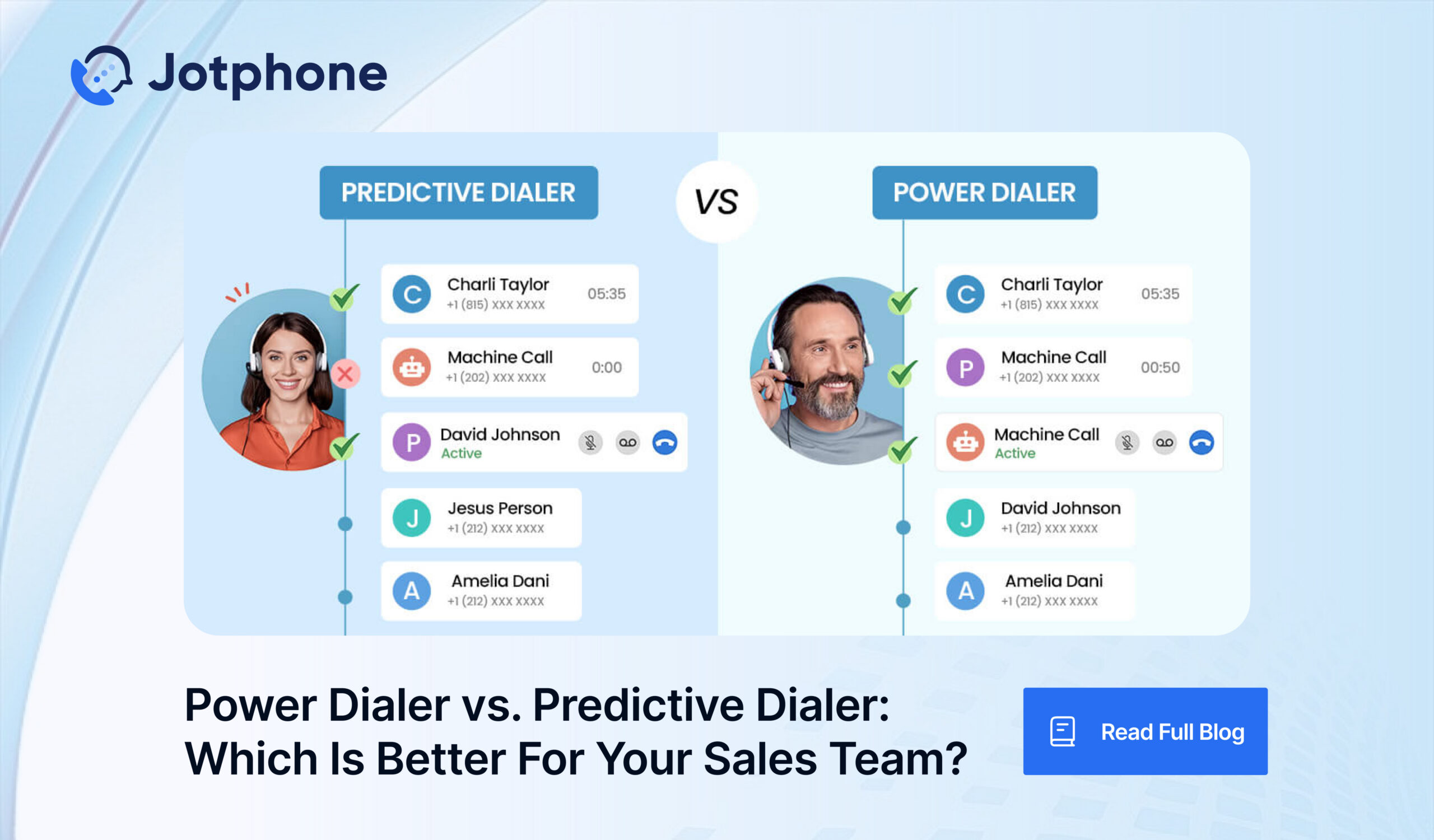
A predictive dialer is a high-volume calling engine. Instead of dialing one number per rep, it uses statistical algorithms to dial multiple phone numbers simultaneously before an agent is even off their current call.
The algorithm predicts when an agent will become available and how many calls need to be dialed to ensure an answered call is immediately routed to a free agent.
The hidden catch with predictive dialers:
-
The “Telemarketer Delay”: Because the software dials in batches, there is often a 1 to 2 second delay between a prospect answering and an agent getting connected. Savvy buyers recognize this silence instantly and hang up.
-
Abandoned Calls: If multiple prospects answer at the same time and only one rep is free, the other calls get dropped. In many jurisdictions (like the US under TCPA guidelines), abandoned call rates must remain below strict legal thresholds (typically 3%).
Best for: Large call centers, debt collection, mass market consumer surveys, and low-complexity B2C sales where total reach matters more than lead quality.
Power Dialer vs Predictive Dialer: How Do They Work Differently?
A power dialer contacts customers one at a time without requiring representatives to manually dial every number. This allows agents to focus on each conversation and review customer information before moving to the next contact.
A predictive dialer takes a higher-volume approach by dialing multiple contacts based on agent availability. When someone answers, the call can be routed to an available representative.
Both systems can support outbound sales, but the better option depends on the organization’s needs. Smaller teams that prioritize personalized conversations may benefit from a power dialer, while larger teams handling high call volumes may prefer a predictive approach.
Power Dialer vs Predictive Dialer: Which Is Faster?
A power dialer is not designed to handle extremely high call volumes, but it gives representatives more control over connected calls. Agents have more time to understand customer needs and develop valuable leads. Power dialer software can therefore support a more focused and personalized calling process.
A predictive dialer can reach a larger number of contacts within a shorter period. This can reduce idle time and create more opportunities for sales representatives to connect with prospects.
For larger sales teams with high-volume campaigns, the faster calling capability can be an advantage. Smaller teams may prefer a controlled approach that allows representatives to spend more time with each prospect.
How Power Dialer Improves Sales Team Productivity?
A power dialer reduces the need for manual dialing, allowing representatives to spend more time on actual sales conversations. Since agents are not required to manually enter every phone number, they can focus on understanding prospects and building stronger relationships.
The system also gives representatives an opportunity to prepare before each conversation. Customer information can be reviewed in advance, helping agents approach calls with greater context and confidence.
By reducing repetitive tasks, a power dialer can help sales teams create a more organized calling process while maintaining personalized conversations.
How Predictive Dialer Improves High-Volume Sales Calling
A sales dialer helps sales teams increase the number of calls they can attempt within a given period. This makes predictive dialing useful for reaching a large number of customers in a short time.
It can reduce idle time between conversations and help representatives quickly move through large prospect lists. Connected calls can be routed to available agents, creating a more efficient high-volume calling workflow.
This approach is particularly useful for outbound teams focused on large-scale campaigns. However, businesses need enough representatives to handle connected calls effectively.
How JotPhone Helps Sales Teams With Outbound Calling
Choosing the right dialer is only one part of an effective sales communication strategy. Teams also need a simple way to manage calls, contacts, messages, and communication activity.
JotPhone provides a Powerful Dialer that allows users to make calls, access contacts, view logs, and manage communication from one interface. Its platform also supports inbound and outbound calls, helping sales teams manage business communication from one place.
This can help representatives spend less time switching between different tools and more time communicating with prospects.
How JotPhone Helps Sales Managers Track Team Activity
Sales managers need visibility into team communication to understand how their representatives are performing. JotPhone’s Activity Dashboard provides visibility into calls, messages, and team activity in real time.
JotPhone also provides call monitoring and analytics capabilities, giving businesses additional insight into their communication activity.
This can help managers identify calling patterns, monitor team activity, and make better decisions about their sales communication process.
How JotPhone Supports Calling And Messaging
Sales conversations do not always end with a phone call. Prospects may need additional information through text messages or follow-ups after a conversation.
JotPhone combines calling with SMS and MMS in one shared workspace. This allows teams to manage different communication channels while keeping conversations more organized.
For sales teams, having calling and messaging together can make it easier to maintain communication throughout the customer journey.
Personalization Vs Calling Volume
When targeting a smaller number of contacts for lead generation, a personalized calling approach with a power dialer can be more effective. It gives representatives enough time to understand each prospect and have a meaningful conversation.
On the other hand, if the goal is to run a campaign that introduces customers to products, services, or offers, a predictive dialer can help reach more people within a shorter period.
Choosing the right system for the right task can improve overall sales results. Businesses can also use different dialing approaches at different stages of their sales process.
Power Dialer vs Predictive Dialer: Pros and Cons
Power Dialer
Pros
A power dialer supports personalized business conversations and gives representatives more control over each call. It is particularly suitable for small businesses, targeted prospects, follow-ups, and relationship-based selling.
Cons
A power dialer cannot reach as many contacts within a short period as a predictive system. This can make large campaigns slower because representatives generally move to the next contact after completing the current call.
Predictive Dialer
Pros
A predictive dialer can handle a high volume of calls within a short period, making it suitable for large outbound campaigns. It can help teams reach more prospects and reduce idle time between calls.
Cons
A predictive system works best when enough representatives are available to handle connected calls. Its high-volume approach may also provide less opportunity for representatives to prepare for highly personalized conversations.
Which Dialer Is Better For A Small Sales Team?
For a small sales team, a power dialer can be a practical choice because it supports the auto dialer for sales process. It automates repetitive dialing while allowing representatives to focus on one prospect at a time.
This allows sales representatives to spend more time understanding customer needs and creating personalized conversations.
The controlled calling process also makes it easier for smaller teams to focus on relevant prospects instead of simply trying to maximize call volume.
Which Dialer Is Better For Large Sales Teams?
For large sales teams, a predictive dialer can be a strong choice because it allows representatives to reach more customers within a shorter period.
Once a call is answered, the system can connect it to an available agent. This approach can be effective for large-scale campaigns where reaching a high number of prospects is a priority.
Large teams can also use a more controlled dialing approach for follow-ups when personalized conversations are required.
How To Choose The Right Sales Dialer For Your Business?
Consider the following factors before selecting a dialer system:
- Determine your average daily call volume.
- Consider the size of your sales team.
- Evaluate how much personalization your sales process requires.
- Identify whether your team focuses on quality conversations or high-volume outreach.
- Consider CRM and contact management requirements.
- Review call recording, monitoring, and analytics capabilities.
- Evaluate reporting and performance tracking features.
- Consider ease of use and employee training requirements.
- Review scalability as your sales team grows.
- Compare pricing based on your actual communication requirements.
Can You Use A Power Dialer And A Predictive Dialer Together?
Yes, businesses can use both approaches when their sales process requires different calling strategies.
For example, a large sales team can use high-volume dialing for initial outreach and then use a power dialing approach for qualified leads that require more focused conversations.
This combination allows businesses to use calling volume for prospecting while maintaining a more personalized approach during follow-ups.
Conclusion
By now, you should have a clearer understanding of Which is better power dialer or predictive dialer for sales teams. The right choice depends on your team size, calling volume, sales goals, and the level of personalization required during customer conversations.
Small teams may benefit from the controlled approach of a power dialer, while larger teams handling high-volume campaigns may prefer a predictive system. Businesses can also use different approaches for prospecting and follow-up activities.
If you are looking for a business communication platform that supports calling, messaging, contacts, team activity, and outbound communication, JotPhone can help bring these activities together in one platform. Its Powerful Dialer, Activity Dashboard, team management, messaging, call monitoring, and analytics capabilities can support a more organized sales communication workflow.
Explore JotPhone to build a more efficient and connected sales calling process.